
Currency: $USD

Fresh Meat Buying Guide

Walking up to a meat counter can feel overwhelming. Rows of pink, red, and marbled cuts, confusing labels, and prices that vary from tray to tray; how do you know you’re getting real quality for your money? The truth is, buying fresh meat is a skill, and once you know what to look for, you’ll never second-guess a purchase again.

At Lansdale Meats & Deli in Lansdale, PA, we’ve spent over two decades as a third-generation, family-owned butcher shop, helping customers bring home meat they can trust. This comprehensive fresh meat buying guide walks you through everything you need to know before your next trip to the meat counter, whether you’re shopping for a weeknight dinner, stocking up for the month, or planning a catered event.

Why Buying Fresh Meat the Right Way Matters?

Fresh meat isn’t just about taste, though that’s certainly part of it. The freshness of what you buy directly affects:

  • Flavor and texture: Fresher meat cooks more evenly and holds its texture better.
  • Food safety: Improperly handled or aged meat carries a higher risk of bacteria.
  • Value for money: Meat that spoils before you use it is money wasted.
  • Nutrition: Freshness helps preserve the natural vitamins and proteins in the meat.

Learning a few simple checks before you buy can save you from disappointing meals and unnecessary waste.
How to Spot Fresh Meat: Color, Texture, and Smell?

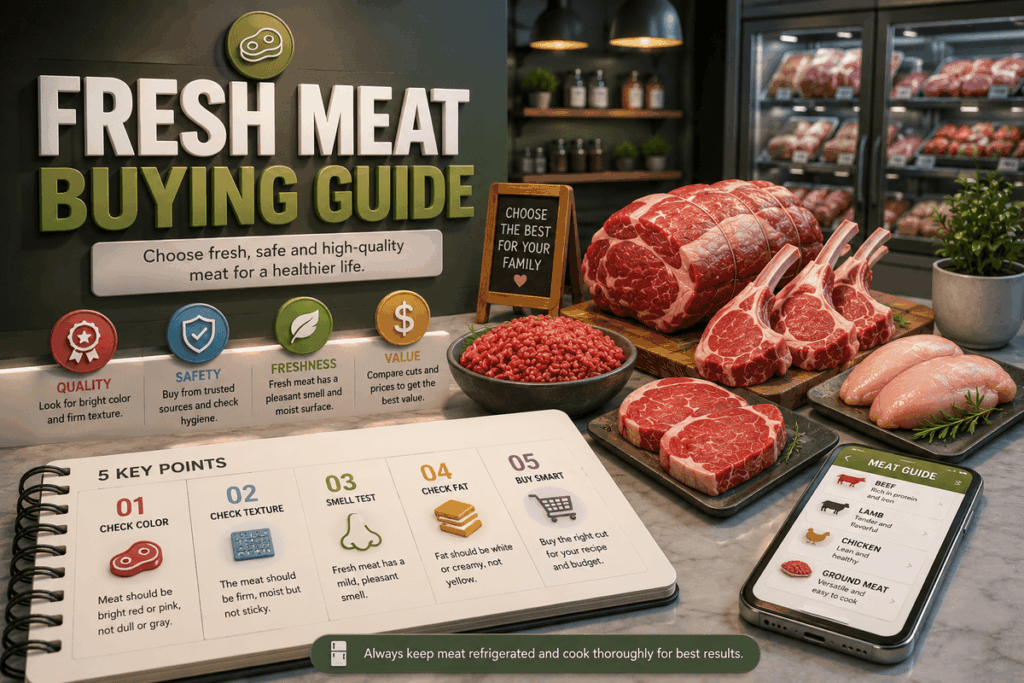
Your eyes, nose, and fingers are the best tools you have at the meat counter. When using this fresh meat buying guide in real life, keep these visual and physical cues in mind:

  • Beef: Should be a bright cherry-red on the surface, with a slightly darker shade inside (that’s normal, simply due to oxygen exposure). Avoid cuts that look brown, grey, or have a dull, dry surface. Fat should be creamy white, not yellow.
  • Pork: Should be pale pink to rosy red, with white, firm fat. Steer clear of pork that looks greyish or has dark spots.
  • Poultry (Chicken or Turkey): Should be plump with a slightly pink hue and no strong odor. The skin, if present, should look moist but never slimy or sticky.
  • Fish and Seafood: Should have a clean, ocean-like smell rather than a strong “fishy” odor. The flesh should spring back when pressed, and the eyes (if the fish is whole) should be clear rather than cloudy.

Across every category, texture matters as much as color: fresh meat should feel firm and slightly moist, never sticky or tacky. And trust your nose; any sour or ammonia-like smell is an immediate red flag, no matter how good the meat looks.

Understanding Meat Labels and Grades

Meat labels can be confusing, but a few terms are worth knowing before you shop:

  • USDA grades (Prime, Choice, Select): Reflect marbling and tenderness. Prime has the most marbling and is the most tender; Select is leaner.
  • “Sell-by” vs. “use-by” dates: Sell-by tells the retailer when to pull the product from the shelf; use-by is the better guide for you as the shopper.
  • “Natural” and “no antibiotics”: These terms are regulated, but what they guarantee can vary, so it’s always worth asking your butcher directly what a label means.

This is where shopping at a butcher counter has a real advantage over a sealed supermarket package; you can simply ask, and get a straight answer from someone who handles the meat every day.

Choosing the Right Cut for the Job

Not every recipe calls for the same cut, and picking correctly saves both money and guesswork:

  • Grilling or pan-searing: Ribeye, New York strip, or filet mignon for beef; boneless pork chops or loin for pork.
  • Slow cooking or braising: Chuck roast, brisket, or pork shoulder, which turn tender with long, low heat.
  • Ground meat: Check the fat-to-lean ratio (80/20 is popular for burgers; leaner blends suit lighter dishes).
  • Quick weeknight meals: Thin-cut chicken breast, chicken fingers, or other pre-portioned cuts save prep time.

At Lansdale Meats, our butcher’s counter offers handmade, ready-to-cook steaks, pork, poultry, and fresh fish. If you have a specific recipe in mind, our team is happy to customize a cut to your liking. Just stop by the service window or send us your request ahead of time.

Local Butcher vs. Supermarket: What’s the Difference?

Supermarket meat is convenient, but a dedicated butcher shop offers a few advantages worth knowing:

  • Freshness and turnover: Product typically moves faster and is cut to order rather than pre-packaged days in advance.
  • Customization: Need a specific thickness, a boneless cut, or a special trim? A butcher can handle it on the spot.
  • Knowledgeable guidance: Staff who work with meat daily can recommend the right cut for your recipe, portion size, or budget.
  • Local sourcing: A shorter time from farm to counter compared to many supermarket supply chains.

As a family-owned shop now in its third generation, Lansdale Meats & Deli combines that hands-on butcher experience with the convenience of wholesale options for anyone stocking up for a family, a freezer, or an event.

Smart Shopping Tips: Portioning, Budgeting, and Bulk Buying

A few habits make fresh meat shopping easier on both your schedule and your wallet:

  • Plan your week: Shop so you buy only what you’ll actually cook.
  • Buy in bulk: When it makes sense, family meat bundles often stretch a budget further than buying cuts individually.
  • Don’t overlook prepared sides: A good deli counter, like ours, also offers ready-made sides such as roasted red potatoes, baked ziti, or green bean almondine, which pair perfectly with fresh cuts and save time on busy nights.
  • Ask about catering: For parties or gatherings, pre-portioned trays and fully cooked options take the guesswork out of feeding a crowd.

Storing Your Fresh Meat After Purchase

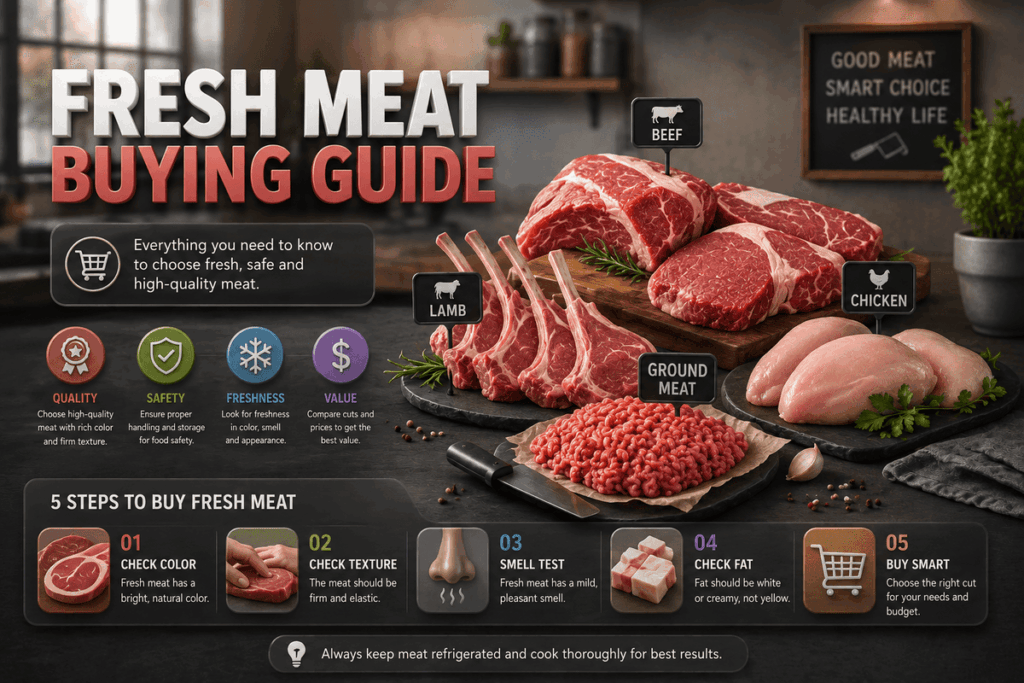
Buying quality meat is only half the job; how you store it afterward determines whether that freshness actually lasts. As a quick rule of thumb: refrigerate meat promptly, keep it in its original wrapping or an airtight container, and plan to use or freeze it within a few days. (We’ve covered proper meat storage in more detail in a separate guide on our blog, if you’d like the full breakdown.)
FAQs

Still have questions about selecting or storing your meat? We’ve compiled the answers to the most common queries our customers ask at the butcher counter to help you shop with confidence. 


How can I tell if meat has gone bad without cutting into it?

Trust your senses first. A sour or ammonia-like smell, a slimy or sticky surface, or a dull greyish/brownish color are all signs the meat is past its prime.

Is it better to buy meat fresh or frozen?

Both can be high quality. is ideal if you’re cooking within a few days, while freezing is a great option for bulk buys, as long as it’s frozen promptly after purchase.

What’s the best way to buy meat on a budget?

Buying in bulk bundles, choosing tougher cuts suited to slow cooking, and planning meals around what’s on sale that week all help stretch your budget without sacrificing quality.

Can I ask a butcher to prepare a custom cut?

Yes; this is one of the biggest advantages of shopping at a butcher counter. At Lansdale Meats, our team regularly customizes cuts, thickness, and trim to match whatever you’re cooking.

Should I buy meat and deli items from the same place?

It’s convenient and often more cost-effective, especially when a shop like Lansdale Meats & Deli offers fresh meats, deli, cheese, and prepared sides all under one roof.

Buying fresh meat doesn’t have to be intimidating once you know what to look for: color, texture, smell, and a bit of confidence in asking questions.midating once you know what to look for: color, texture, smell, and a bit of confidence in asking questions.

Share This Post:

Useful Links

Follow Us

Working Hours
Monday: 9:00am-7:00pm
Tuesday to Friday: 8:00am-7:00pm
Saturday: 8:00am-6:00pm
Sunday: 8:00am-3:00pm
Thank you for choosing Lansdale Meats & Deli, your trusted partner for exceptional quality and flavor. We’re committed to providing you with the finest selection of fresh, locally-sourced meats, delectable deli items, and expertly crafted catering services. From juicy steaks to savory sausages, our wide range of products is sure to satisfy every craving. Our knowledgeable staff is always on hand to offer expert advice and personalized recommendations.

Join our community of food lovers and stay connected. Follow us on social media to stay up-to-date on our latest specials, mouthwatering recipes, and culinary tips. Engage with our community, share your culinary creations, and let’s inspire each other to cook delicious meals. Experience the Lansdale difference today.
Copyright 2026 © Lansdale Meats. All rights reserved – Powered by mediaEXPLOSIONinc.